Rockstar confirmed hurricanes, localised storms, and persistent puddles in GTA 6. Here's exactly how the re-engineered weather system works, with developer quotes.
Rockstar has confirmed that GTA 6 includes hurricanes and tropical storms, and that it re-engineered its entire weather system so conditions are localised and persistent — meaning one district of Leonida can sit under heavy rain while another stays sunny, and the aftermath sticks around after the storm passes.
The details come from Game Informer's Issue 382 cover story, published 29 September, built on interviews with several Rockstar lead designers. The most quotable material comes from Owen Shepard, Rockstar's vice president of art for lighting and rendering, who described the system in unusual technical depth for a pre-launch interview.
Weather Is Now Localised, Not Global
This is the structural change, and it's the one that matters most.
In previous Grand Theft Auto games, weather was effectively a global state — it was raining in the game, which meant it was raining everywhere. GTA 6 replaces that with fully dynamic cloudscapes that roll across the map, producing genuinely different conditions in different places at the same moment.
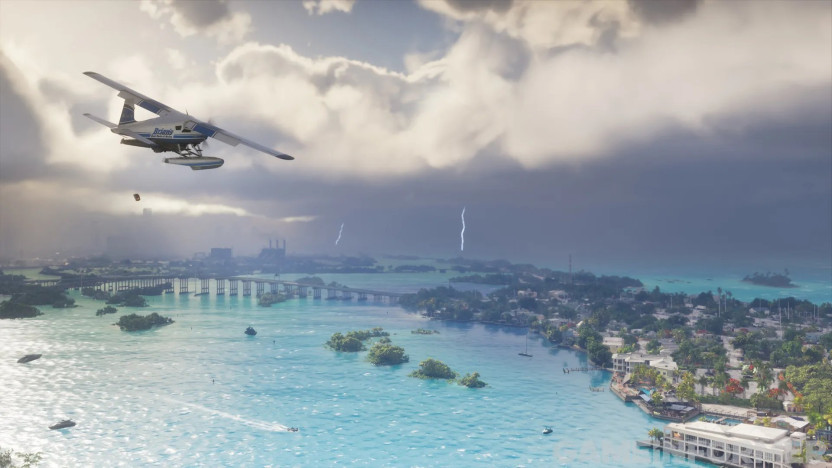
Shepard's description: "We have re-engineered our weather system to make everything much more localized and persistent, and really wanted the world to feel dynamically solid and achieve a sense of scale we haven't felt before. The world features new fully dynamic cloudscapes that roll across the map; these give us a broad spectrum of weather, from the clear blue skies of a Miami winter to the vertiginous cumulonimbus clouds with sporadic lightning that you see most afternoons in the Floridian summer and autumn."
Two things in that quote are worth isolating. First, the seasonal range is explicitly modelled — clear winter skies at one end, towering summer thunderheads at the other. Second, "sporadic lightning that you see most afternoons" describes a genuine South Florida weather pattern, not a generic storm preset. The screenshot above shows exactly this: clear turquoise water and sunlit keys on one side of the frame, a dense storm wall with lightning strikes on the other.
The system builds on technology introduced in Red Dead Redemption 2, re-engineered rather than reused.
Weather Leaves Evidence Behind
"Persistent" is the other half of Shepard's phrasing, and it means the world keeps a record of what just happened to it.
Rain produces puddles and wet surfaces that remain after the rain stops. The right conditions after a storm can produce rainbows. This is a meaningful departure from a weather system that simply toggles a rain shader on and off — the environment carries the aftermath forward in time.
For a game set in a state defined by afternoon downpours, that persistence is what makes the weather read as climate rather than as an effect.
The Wind Simulation Is Doing Real Work
The most surprising level of detail is in wind, which in most open-world games is decorative at best.
Shepard: "[Expect] offshore breezes after sunset, convectional updrafts, and occlusion from buildings. Hair and debris will swirl around on rooftops; gusts of wind will blow ripples over the water surface and bend the grass in swamps."
Breaking that down into what's actually being simulated:
| Wind behaviour | What it means in practice |
|---|---|
| Offshore breezes after sunset | Time-of-day-driven wind direction, matching real coastal thermal cycles |
| Convectional updrafts | Rising air from heated ground — the mechanism that builds Florida's afternoon thunderheads |
| Occlusion from buildings | Structures block and redirect wind rather than air passing through them |
| Rooftop hair and debris | Wind affects character hair and loose objects, not just foliage |
| Ripples across water | Wind drives the water surface |
| Grass bending in swamps | Vegetation responds directionally to gusts |
Occlusion from buildings is the standout. It implies wind is being computed against the city's geometry, which is why a Vice City alley should behave differently from an open beach.
Hurricanes and Tropical Storms Are Confirmed
Rockstar has directly confirmed that Leonida gets hit by hurricanes and large tropical storms — the single most requested weather feature from the community since Trailer 1 established the Florida setting.
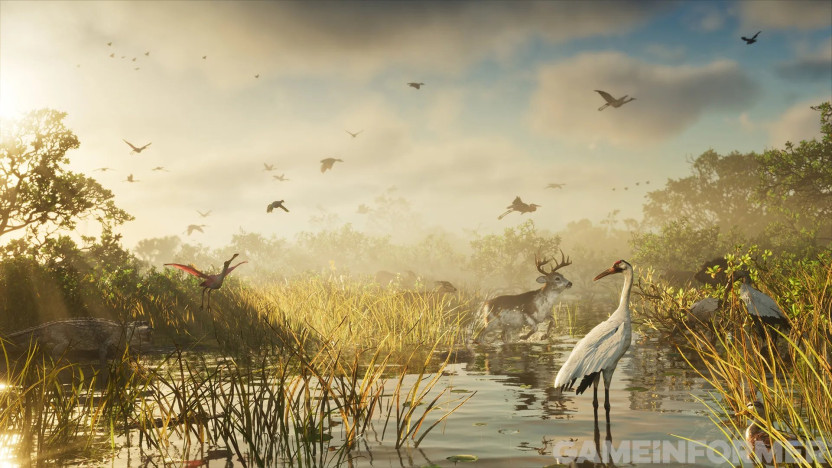
Shepard described the heavy end of the scale: "Heavy clouds, strong winds, dense atmospherics, and a lot of rain combine so that everything is dripping wet, water is gushing off roof edges and lampposts, thunder rumbles, and flashes of lightning light up the clouds dramatically."
Note what that describes and what it doesn't. It is a description of rendering and atmosphere — how a hurricane looks and sounds. It is not a description of mechanical consequence. Rockstar has not said whether hurricanes cause flooding, damage structures, close roads, alter mission availability, or affect traffic and NPC behaviour.
The real-world grounding is worth noting, because it's the kind of detail writer Marcus Stewart — a lifelong South Florida native — was well placed to press Rockstar on. Atlantic hurricane season runs June through November, peaking in late summer, which lines up precisely with the "summer and autumn" window Shepard cited for Leonida's most dramatic skies. Whether Rockstar ties storm activity to an in-game calendar in the same way, or simply draws from the range at random, is one of the specifics the cover story doesn't settle.
What's Still Unknown About GTA 6's Weather
Being precise here matters, because the gap between "confirmed to exist" and "confirmed to matter" is where most pre-launch disappointment comes from:
- Frequency. Rockstar has not said how often hurricanes or tropical storms occur, or whether they're scripted to story beats, seasonal, or genuinely random.
- Gameplay effect. No confirmation that severe weather changes driving physics, flight, visibility penalties, mission design, or police behaviour.
- Flooding and damage. Storm surge, standing floodwater, and destructible or damaged environments have not been confirmed in any form.
- Forecasting. Nothing has been said about whether players can see weather coming — via a mobile app, radio, or any in-world signal.
- Seasons. Shepard references Miami winter and Floridian summer conditions, but Rockstar has not confirmed whether the game runs a seasonal cycle or simply draws from a range of conditions.
Treat the confirmed list as the floor and everything above as open until Rockstar says otherwise.
Why This Is More Than a Graphics Flex
Weather in a Grand Theft Auto game has historically been atmosphere — it changes the mood of a drive and little else. The reason this re-engineering is worth paying attention to is that it compounds with the other systems revealed in the same cover story.
Leonida holds more than 170 animal species with fur and feathers that get wet, matted, and dirty depending on environmental context. A re-engineered weather system is the thing producing those conditions. Wind bends swamp grass the wildlife lives in. Persistent puddles sit on streets that police are chasing you through.
Rockstar's pitch across the whole feature is interconnection, and weather is the system touching the most others. Whether that translates into weather that genuinely changes how you play — rather than how the game looks while you play — is the open question until 19 November.
Frequently Asked Questions
Does GTA 6 have hurricanes?
Yes. Rockstar confirmed in Game Informer's Issue 382 cover story that GTA 6 includes hurricanes and large tropical storms. The studio has not said how frequently they occur or how they affect gameplay.
How does GTA 6's weather system work?
It's localised and persistent rather than global. Fully dynamic cloudscapes roll across the map, so one part of Leonida can have heavy rain while another stays sunny. Rain leaves puddles and wet surfaces behind after it stops, and the right post-storm conditions can produce rainbows.
Can it rain in one part of the GTA 6 map and be sunny in another?
Yes. Rockstar VP of art for lighting and rendering Owen Shepard confirmed the system was re-engineered to be 'much more localized and persistent,' with dynamic cloud formations producing different conditions in different areas simultaneously.
Does wind actually do anything in GTA 6?
Per Shepard, yes: offshore breezes after sunset, convectional updrafts, and wind occlusion from buildings. Hair and debris swirl on rooftops, gusts create ripples across water surfaces, and swamp grass bends in response to wind.
Will hurricanes cause flooding or damage buildings in GTA 6?
Unconfirmed. Rockstar has described how hurricanes look and sound but has not stated whether they produce flooding, storm surge, structural damage, or any mechanical effect on missions and traffic.
Is GTA 6's weather better than Red Dead Redemption 2's?
GTA 6's system is built on technology introduced in Red Dead Redemption 2 but re-engineered for localisation and persistence. Rockstar frames it as a step beyond RDR2 rather than a reuse, though no side-by-side comparison has been demonstrated publicly.